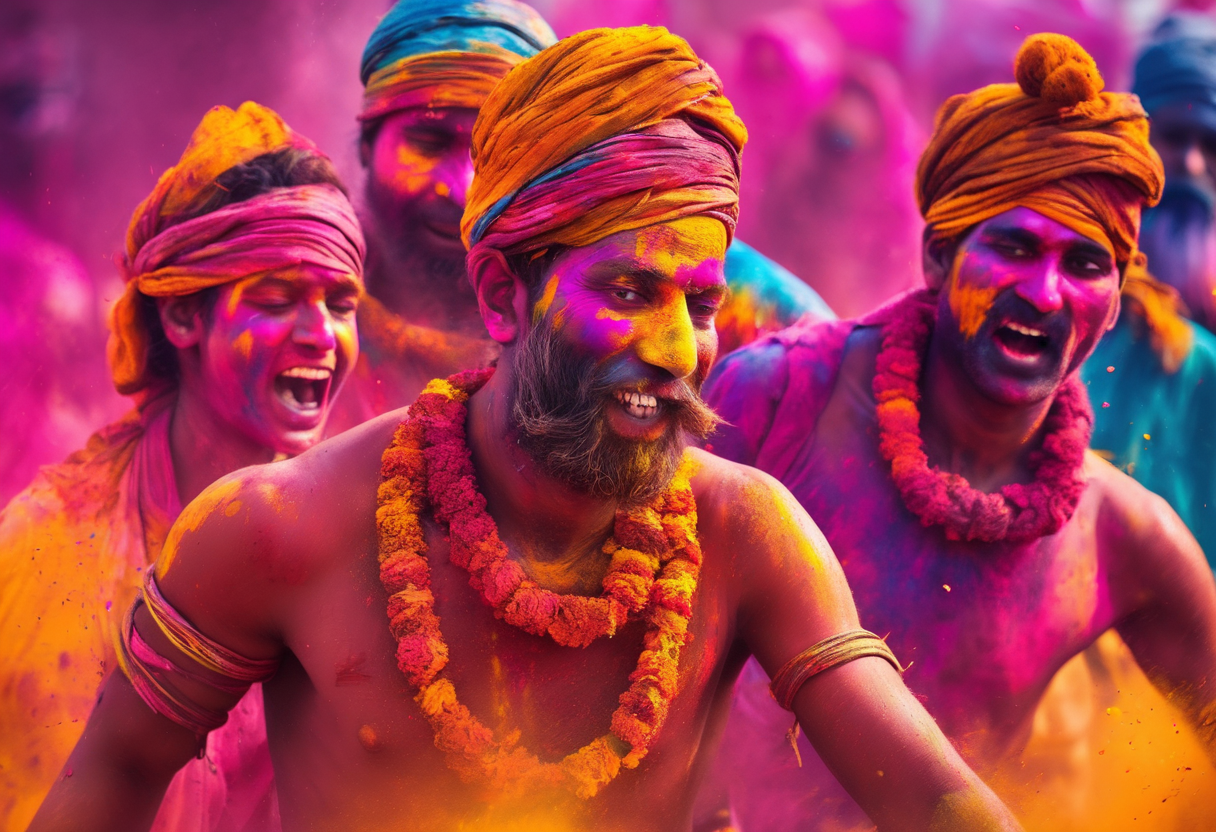
Holi, also known as the Festival of Colors, is a popular Hindu festival celebrated in the springtime. It is primarily observed in India and Nepal, but has also become increasingly popular in other parts of the world. The origins of Holi can be traced back to ancient Hindu mythology, with a variety of stories and legends associated with the festival. One of the most common stories is the tale of Prahlada, a devotee of Lord Vishnu who was saved from his evil father by the god’s intervention. Holi is seen as a celebration of good triumphing over evil, and it is believed that the burning of a bonfire on the eve of Holi represents the destruction of the demon Holika.
The festival is also associated with the love story of Krishna and Radha. According to legend, the mischievous god Krishna used to play pranks on his beloved Radha by drenching her in colored water and throwing colored powder on her. This playful act has become a significant part of Holi, with people spraying colored water and powder on each other in celebration. It is also believed that Krishna’s playful and youthful energy is reflected in the joyous and fun-filled atmosphere of the festival.
Over the years, Holi has evolved and taken on different meanings for different communities. In some regions of India, it is seen as a harvest festival while in others it is celebrated as a new year festival. However, the core essence of the festival remains the same – the celebration of love, friendship, and the triumph of good over evil. Today, Holi is not only celebrated by Hindus but has also become a popular cultural event, bringing people of all backgrounds together to enjoy the colors and spirit of this vibrant festival.