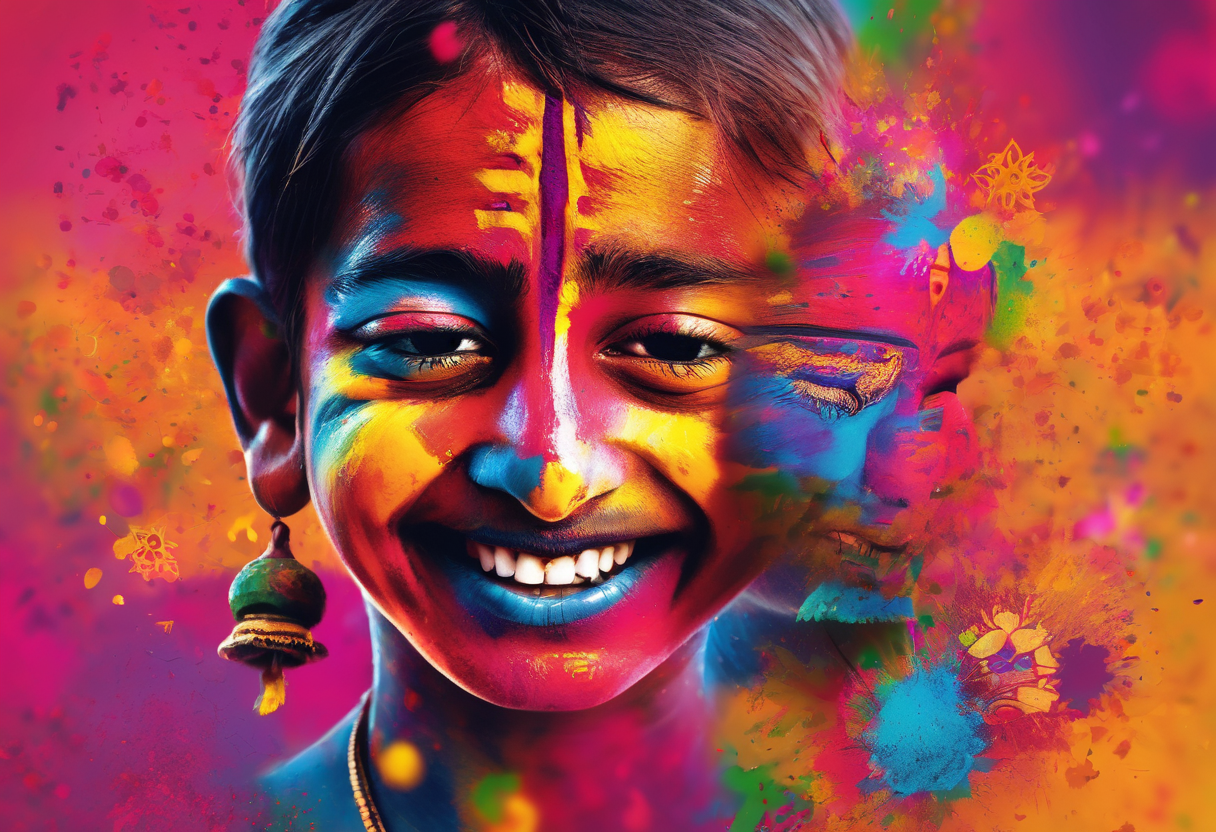
Holi, also known as the “Festival of Colors”, is a popular Hindu festival that is celebrated every year in the month of March. It marks the triumph of good over evil and the arrival of spring. It is a time of joy, love, and unity as people from all walks of life come together to celebrate this vibrant and colorful festival. The significance of Holi dates back to ancient Hindu mythology and has been passed down through generations as a symbol of love, friendship, and harmony.
The most popular tradition associated with Holi is the throwing of colorful powder, also known as “gulal”, on family and friends. This is a representation of the burst of colors that spring brings and also signifies the breaking of social barriers. People of all ages and backgrounds come together to play with colors, dance to traditional music, and share traditional dishes. Another important tradition of Holi is the lighting of bonfires the day before the main festival. This ritual symbolizes the triumph of good over evil through the burning of the demon Holika. It is also a time for reflection and letting go of negative energies.
Holi holds great significance in Hindu culture and is celebrated with enthusiasm and devotion not only in India but also all over the world. It is a time for spreading joy, forgiveness, and love. The festival brings people together, promotes unity, and nourishes relationships. So let’s celebrate Holi with a heart full of colors and love, and embrace the traditions that make this festival so special.